For manufacturers

Inspection and identification on the line.

An inspection station must fit the existing production process and be usable by the people running the line. Start with the defect or identification requirement, the available cycle time and the action after an incorrect or missing result. Select camera, optics, lighting and processing around those conditions.

Inspection on a production line

What you need

What you ask of vision.

Start from the current production loss: manual checks, missed defects, unnecessary rejects or missing product identity. Record where it occurs and who handles it. The inspection must fit the existing line, including cleaning, format changes and the available installation window.

A clear job

Define the required decision and the machine action after a defect or missing result. Bring good products, defects and borderline examples with expected outcomes. Agree separately whether the system must detect a feature, measure it or read its content.

Match processing to the line

Consider a smart camera when its tools and interface cover the complete task. Compare external processing when several views, custom logic or shared data are required. Test the selected option at the actual speed with logging and communication enabled.

With or without a partner

Assign responsibility for mounting, PLC changes, reject handling and operator instructions. Component supply leaves implementation work with your team or integrator. For integration support, agree the deliverables and acceptance test before installation.

Architecture

Smart camera or PC-based.

A smart camera can process a bounded inspection locally. PC-based vision can coordinate several cameras, shared data or custom processing. Compare both against the required tools, timing, fault isolation and maintenance skills. AI is available on some smart-camera models as well as PC systems; verify the exact configuration.

Job on the lineTypical setupWhen to step up
Quality, surface, assemblySmart camera or PCPC when variation is high or views must share logic
Codes and OCRReader or smart camera firstPC when codes and inspection must live in one system
Measurement2D, or 3D when height is required3D only when 2D cannot take the measurement
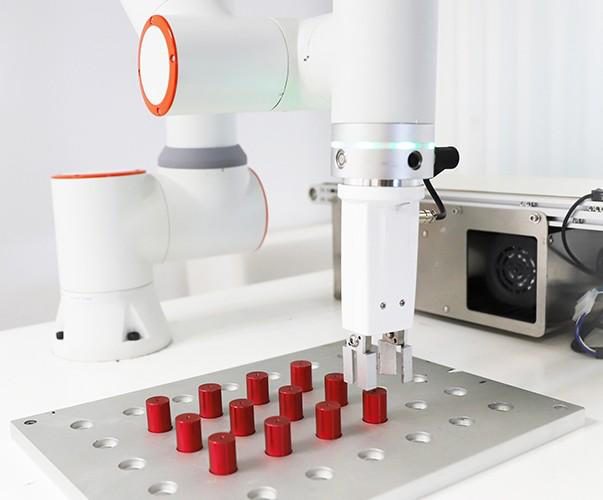
Robot cellCamera plus feedback to the controller3D when pose in space is required

Start with the product set. We will help on a line problem.

You can buy a camera, lens, lighting or software from us and install it yourself. New inspection point: we look at samples and whether classical Computer Vision is enough.

Code reading on the line

Product set

Retain exact part numbers, software versions and a configuration backup. Include spare parts and a restore procedure that maintenance can test.

New inspection point

Use a sample trial to resolve uncertain visibility, contrast or timing. Agree limits for missed defects and false rejects before tuning, then test independent samples and the expected product variation.

Labs and small series

For short production runs, include setup time and recipe changes in the trial. A bench setup can establish image feasibility, but line installation still needs validation of movement, triggering and operator recovery.

Vincent van Montfoort

Prepare the line trial and investment estimate

Send representative products, speed range, changeover conditions and the existing control interface. Record current inspection hours, rework, scrap and line stops. Compare hardware plus engineering hours × rate, installation losses and annual maintenance. Include restart, recipe change and operator recovery in acceptance. Released labour time is only a financial saving when it can actually be used or avoided.